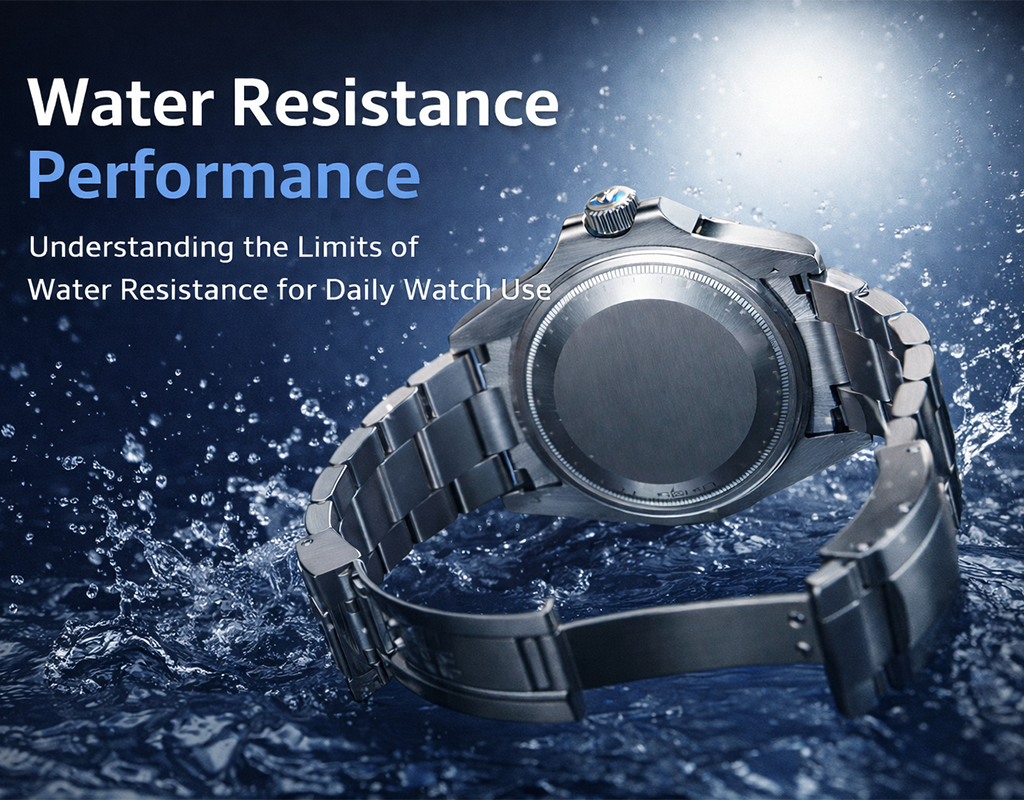
Water Resistance Performance
Water resistance is an important feature in daily watch usage, but it is often misunderstood. Many users assume that water resistance means a watch can safely handle all water environments. In reality, water resistance only provides limited protection against accidental contact with water during normal daily wear.
Understanding the limitations of water resistance can help reduce the risk of moisture entering the watch and affecting internal components.
Water Resistance Limitations
Non-Diving Watches and Water Exposure
Watches that are not designed as diving watches are generally not recommended for heavy water exposure. While they may tolerate small splashes during everyday activities, they are not intended for prolonged immersion or underwater use.
Examples of situations that should be avoided include:
Swimming or staying in water for extended periods
Diving or participating in underwater activities
Frequent submersion in water during daily routines
These watches are mainly intended for regular daily wear rather than water-based environments.
Steam and High-Temperature Environments
It is also not recommended to wear watches in hot or steamy environments, as steam can penetrate the watch case more easily than normal water exposure. Steam particles are extremely small and can enter through seals or small gaps, especially when the watch experiences temperature changes.
Common environments where watches should be removed include:
Showering or bathing
Saunas and steam rooms
Hot spring environments or hot baths
Repeated exposure to steam or high temperatures may affect the watch’s internal components over time.
Practical Recommendations for Daily Use
To help maintain the watch in good condition during everyday use, it is advisable to follow several simple precautions. These habits can help reduce the chance of moisture entering the watch case.
Recommended practices include:
Avoid exposing the watch to large amounts of water
Remove the watch before showering or entering steam environments
Dry the watch surface if it becomes wet
Avoid operating the crown while the watch is wet
Following these practices helps reduce unnecessary stress on the watch structure and supports stable daily performance.
Summary
Water resistance offers basic protection against accidental water contact, but it does not mean the watch can be used in all water conditions. Non-diving watches should avoid heavy water exposure, and steam environments such as showers or saunas are generally not recommended.
Understanding these limitations helps users make more appropriate decisions during daily wear and can contribute to maintaining the overall condition of the watch over time.
