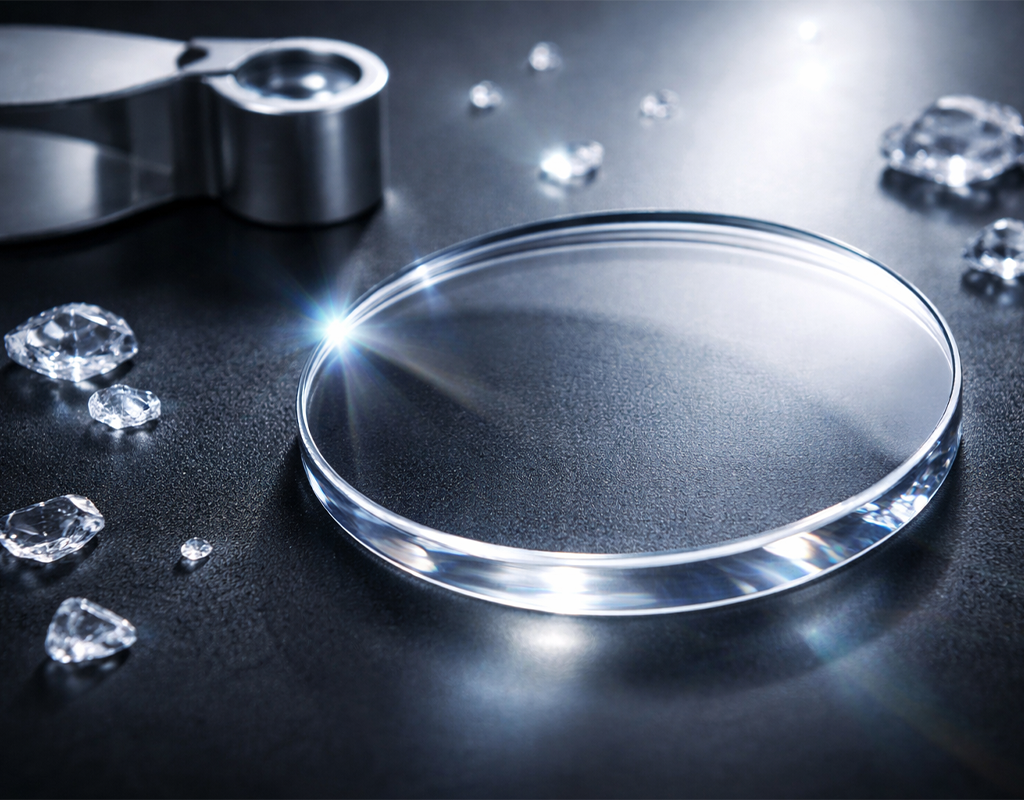
Sapphire Crystal Guide
Sapphire crystal is one of the most widely used materials for watch crystals today. It is known for its strong scratch resistance, excellent optical clarity, and long-term durability. Because of these properties, many modern watches use sapphire crystal to protect the dial while maintaining clear visibility.
In many cases, sapphire crystal is also combined with anti-reflective coating. This coating helps reduce glare and reflections, making it easier to read the dial under different lighting conditions.
What Is Sapphire Crystal
Sapphire crystal is a transparent material used to protect the watch dial. Despite the name, it is not ordinary glass. Instead, it is made from synthetic sapphire, which is produced by crystallizing aluminum oxide under controlled conditions.
Once the material is formed, it is cut, shaped, and polished into a clear crystal suitable for watches. The result is a highly durable and transparent protective layer placed above the dial.
Because of its hardness and optical stability, sapphire crystal has become a common upgrade in many modern watch designs.
Key characteristics include:
• high hardness compared with standard glass
• strong resistance to surface scratching
• clear and stable optical appearance
• compatibility with anti-reflective coatings
These characteristics make sapphire crystal suitable for watches designed for regular daily wear.
Why Sapphire Crystal Is Used in Watches
The watch crystal is one of the most exposed components of a watch. During everyday use, it frequently comes into contact with desks, clothing, or other hard surfaces. Over time, weaker materials can develop scratches that affect both appearance and readability.
Sapphire crystal helps reduce this problem by providing a harder and more durable surface. Its resistance to scratching helps maintain the clarity of the watch dial even after long periods of use.
Manufacturers often choose sapphire crystal for several practical reasons:
• improved scratch resistance during daily wear
• clearer dial visibility over time
• better long-term appearance of the watch
• compatibility with anti-reflective coatings
For many watch buyers, sapphire crystal is considered an important feature that improves both durability and overall usability.
Scratch Resistance of Sapphire Crystal
One of the most well-known properties of sapphire crystal is its hardness. On the Mohs hardness scale, sapphire is typically rated around 9, making it one of the hardest materials used in watch crystals.
Because of this hardness, sapphire crystal resists many types of everyday contact that might scratch other materials.
Common objects that usually do not cause scratches include:
• keys
• coins
• desk surfaces
• metal zippers
However, it is important to understand that sapphire crystal is scratch resistant rather than completely damage-proof. Although it performs well against scratches, a strong impact or sharp blow can still cause cracking.
Understanding this distinction helps set realistic expectations about durability.
Sapphire Crystal vs Mineral Glass
Two of the most common materials used for watch crystals are sapphire crystal and mineral glass. While both materials serve the same purpose, they differ in durability, clarity, and cost.
Sapphire Crystal
Sapphire crystal is widely valued for its resistance to scratching and its ability to maintain a clear surface over time. Because of its hardness, it helps protect the dial from everyday wear and keeps the watch looking clean for longer periods.
Common characteristics include:
• stronger resistance to surface scratches
• clearer appearance after long-term wear
• frequent use in mid-range and higher-end watches
• higher manufacturing cost compared with mineral glass
Mineral Glass
Mineral glass is a traditional watch crystal material that is commonly used in entry-level watches. It offers acceptable durability for daily use and is more affordable to manufacture.
Typical characteristics include:
• lower production cost
• adequate durability for normal wear
• greater likelihood of visible scratches over time
• easier and less expensive replacement
Key Differences
Scratch Resistance
Sapphire crystal offers stronger resistance to everyday scratching. Mineral glass may develop visible surface marks more easily after repeated contact.
Long-Term Clarity
Sapphire crystal usually maintains a cleaner appearance over time. Mineral glass may gradually develop small scratches that reduce surface clarity.
Production Cost
Sapphire crystal generally requires more complex manufacturing processes. Mineral glass is more affordable and therefore common in budget-friendly watches.
For users who prioritize durability and long-term appearance, sapphire crystal is often the preferred option.
Anti-Reflective Coating
Many sapphire crystals include anti-reflective coating, often abbreviated as AR coating. The purpose of this coating is to reduce reflections on the crystal surface so that the dial can be seen more clearly.
Without AR coating, light can reflect off the crystal and partially obscure the dial, especially under strong lighting or sunlight. By reducing these reflections, the coating improves overall readability.
Benefits of anti-reflective coating include:
• clearer dial visibility in bright environments
• reduced glare from lighting
• improved contrast when reading the time
These advantages make AR coating a common feature in watches that prioritize dial visibility.
Single-Sided vs Double-Sided AR Coating
Anti-reflective coating can be applied in different configurations depending on the design of the watch.
Single-Sided AR Coating
Single-sided coating is usually applied to the inner surface of the crystal. Because it is protected inside the watch, the coating is less exposed to wear or scratches.
Advantages typically include:
• protection from external contact
• lower risk of surface wear
• stable long-term performance
This configuration is commonly used when durability is a priority.
Double-Sided AR Coating
Double-sided coating is applied to both the inner and outer surfaces of the crystal. This approach can reduce reflections more effectively and improve overall dial visibility.
Benefits may include:
• stronger reduction of reflections
• clearer and more transparent dial view
• improved readability in bright conditions
However, because the outer coating is exposed, it may gradually wear over time depending on usage.
How Sapphire Crystal Improves Dial Visibility
The watch crystal does more than simply protect the dial. It also affects how clearly the dial can be seen in different lighting environments.
When sapphire crystal is combined with anti-reflective coating, several visual improvements may be noticeable.
For example:
• dial markers appear clearer
• watch hands are easier to distinguish
• dial textures remain visible
• reflections are reduced in bright light
These factors help maintain good readability in both indoor and outdoor conditions.
Common Watches That Use Sapphire Crystal
Sapphire crystal is used across many types of watches because of its durability and clarity.
Dress watches often use sapphire crystal to maintain a clean and elegant dial appearance.
Sports watches benefit from the scratch resistance provided by sapphire crystal during active daily wear.
Dive-style watches frequently combine sapphire crystal with anti-reflective coating to improve readability under bright light.
Mechanical watches also commonly use sapphire crystal to preserve dial finishing and detail.
Advantages of Sapphire Crystal
Sapphire crystal offers several practical advantages for watch users.
These include:
• strong resistance to surface scratching
• high optical clarity
• cleaner appearance after long-term wear
• compatibility with anti-reflective coating
• suitability for everyday use
Because of these benefits, sapphire crystal has become one of the most widely used materials in modern watch crystals.
Limitations of Sapphire Crystal
Although sapphire crystal offers strong performance, it also has certain limitations that should be understood.
Important considerations include:
• higher production cost compared with mineral glass
• strong impacts may still cause cracking
• reflections may occur without anti-reflective coating
• outer AR coatings may wear with extended use
Understanding both advantages and limitations helps provide a balanced view of the material.
Conclusion
Sapphire crystal is widely recognized as one of the most durable materials used for watch crystals. Its combination of hardness, optical clarity, and long-term stability makes it suitable for many types of watches.
When paired with anti-reflective coating, sapphire crystal can also improve dial readability by reducing glare and reflections. Although it is not immune to strong impact damage, it remains a reliable choice for watches designed for everyday use.
