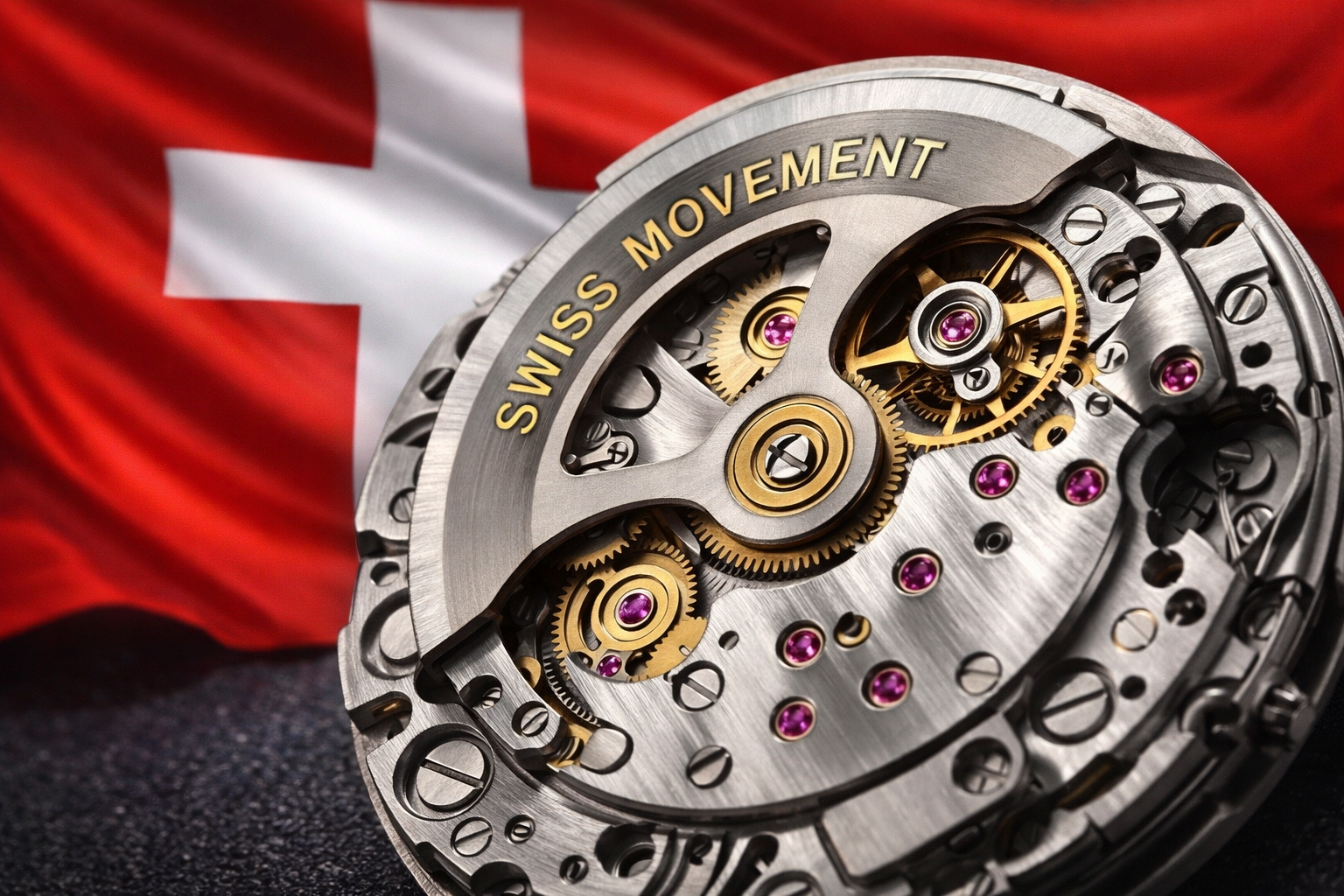
 Swiss Watch Movements
A watch movement is the core mechanical system responsible for timekeeping and energy transmission.
It controls how power flows through the gear train and regulates the motion of the hands.
Among different movement configurations, Swiss movements are widely regarded as a premium mechanical option.
They are often used in higher-tier watch configurations where stability, refinement, and mechanical precision are prioritized.
In replica watches, Swiss movements are sometimes selected for models designed to offer improved mechanical performance and long-term reliability.
These movements are typically chosen by users who appreciate refined engineering and consistent operation during daily wear.
Swiss Movement Overview
Swiss movements refer to mechanical watch movements that are manufactured or assembled using Swiss-origin components and watchmaking techniques.
Within replica watch construction, Swiss movements are usually offered as optional upgraded configurations.
They are typically selected when a higher level of mechanical refinement is desired.
Compared with standard configurations, Swiss movements are often associated with several advantages:
refined mechanical construction
stable internal gear systems
consistent timekeeping performance
durable long-term operation
Because of these qualities, Swiss movements are frequently chosen for watches designed to deliver a more premium mechanical experience.
Movement specifications may still vary depending on the watch model and movement type used.
Why Some Watches Use Swiss Movements
Swiss movements are commonly selected when a watch is configured with higher internal specifications.
Their mechanical structure allows them to perform consistently under regular use, making them a preferred choice for many watch enthusiasts.
Several practical reasons may lead users to select Swiss movements.
Typical considerations include:
preference for higher-quality movement configuration
watches intended for frequent daily wear
interest in refined mechanical craftsmanship
desire for improved mechanical stability
Because of these characteristics, Swiss movements are often found in premium replica watch builds.
For users who wear the same watch regularly, a stable and refined movement can contribute to more consistent performance over time.
Mechanical Characteristics of Swiss Movements
Swiss movements are recognized for their stable mechanical architecture and refined internal construction.
This stability results from careful design of the movement components and the interaction between the gear systems.
Compared with many standard configurations, Swiss movements may demonstrate more consistent mechanical behavior during operation.
Typical characteristics include:
stable gear train engagement
precise balance wheel oscillation
efficient mechanical energy transmission
smooth internal component interaction
These mechanical characteristics help support reliable timekeeping performance during daily use.
Even though mechanical watches require occasional adjustment, a well-constructed movement can maintain stable performance over extended periods.
Energy Transmission and Mechanical Stability
Mechanical watch movements operate through a carefully controlled process of energy storage and release.
Energy stored in the mainspring is gradually transferred through the internal gear train.
This energy ultimately drives the escapement system and balance wheel.
Swiss movements are often valued because their internal systems maintain smooth and stable mechanical interaction during this process.
Stable energy transmission helps ensure:
consistent balance wheel oscillation
smooth gear rotation
steady timekeeping behavior
This mechanical stability becomes particularly noticeable during continuous daily wear.
A well-balanced movement allows the watch to maintain reliable performance throughout its operating cycle.
Automatic Winding Performance
Many Swiss movements feature automatic winding mechanisms, which improve convenience during daily wear.
Automatic systems convert natural wrist movement into stored mechanical energy.
As the watch moves with the wearer’s wrist, the rotor rotates freely inside the movement.
This motion gradually winds the mainspring and replenishes the power reserve.
Efficient automatic winding provides several practical benefits:
maintains power during normal daily activity
reduces the need for frequent manual winding
supports stable energy levels inside the movement
For watches worn regularly, this system helps maintain consistent operational performance.
Swiss Movement Performance Testing
Swiss movement configurations may undergo functional inspection procedures before installation or shipment.
These inspections are designed to verify that the movement operates with stable mechanical performance.
Testing generally focuses on several important operational aspects.
Typical inspection areas include:
timekeeping stability
power reserve performance
winding efficiency
smooth mechanical operation
These checks help ensure that the movement functions within a reasonable mechanical performance range.
Timekeeping Stability
Timekeeping stability measures how consistently a movement maintains accurate time during operation.
Inspection may involve:
observing daily time variation
checking balance wheel consistency
performing basic regulation adjustments
Mechanical watches naturally experience small variations in daily timekeeping.
However, stable movement construction helps maintain consistent overall performance.
Power Reserve
Power reserve refers to the total operating duration after the movement is fully wound.
Testing may include:
fully winding the mainspring
measuring total operating time
confirming stable energy release
A reliable power reserve ensures the watch can continue running for extended periods without additional winding.
Winding Efficiency
Winding efficiency measures how effectively the movement stores mechanical energy.
Inspection procedures may include:
testing manual winding responsiveness
observing automatic rotor movement
verifying energy transfer to the mainspring
Efficient winding allows the movement to maintain stable power levels during normal wear.
Second-Hand Motion
The motion of the second hand reflects the overall stability of the movement gear train.
Inspection may include:
observing the smoothness of second-hand motion
checking for irregular resistance
confirming consistent rotational movement
Smooth second-hand motion usually indicates balanced mechanical interaction between movement components.
Swiss Movement Selection Considerations
Selecting a Swiss movement configuration often depends on personal preference and intended usage.
Users who value refined mechanical engineering may prefer Swiss movements because of their stable construction and consistent operation.
Common reasons for choosing Swiss movements include:
preference for premium mechanical configuration
watches intended for regular or daily wear
appreciation for refined watchmaking craftsmanship
For many watch enthusiasts, Swiss movements represent a combination of mechanical precision, stability, and traditional watchmaking design.
