Understanding 904L Stainless Steel
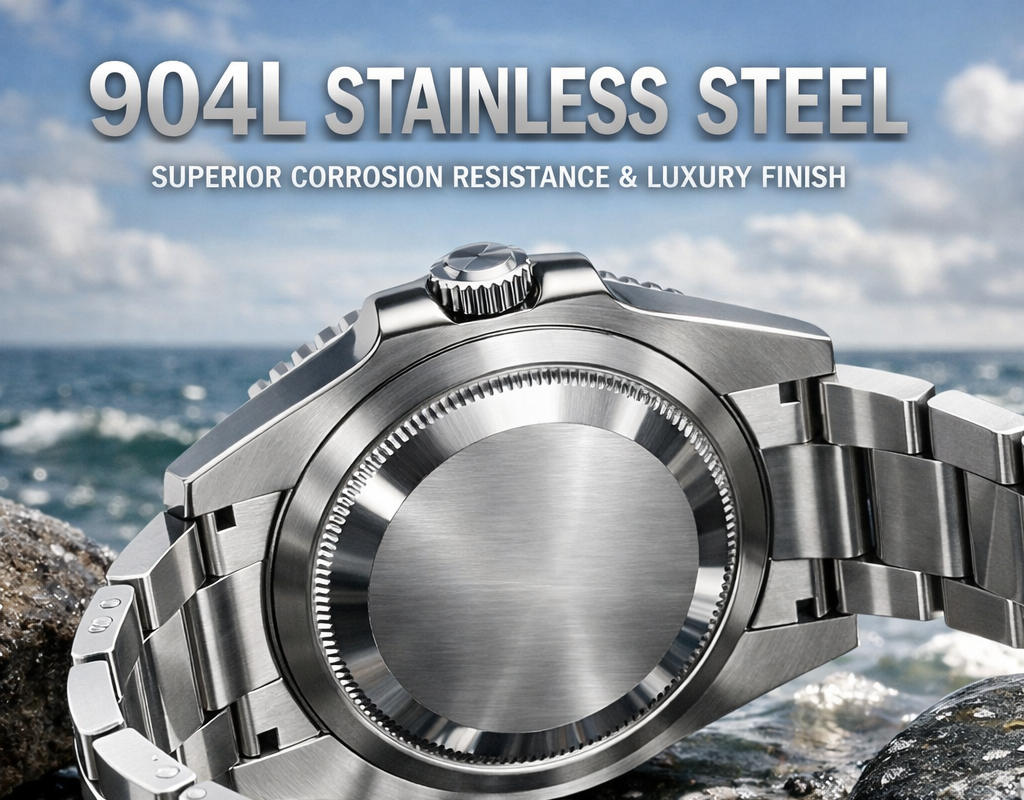
904L stainless steel is widely used in high-end watch cases because of its strong corrosion resistance and bright polished finish.
Compared with standard watch steels, 904L contains higher alloy content, which improves durability and surface stability during daily wear.
In watchmaking, this material is commonly used for watch cases, bezels, and bracelets, where durability and finishing quality are important.
This guide explains the structure, properties, and typical applications of 904L stainless steel in watch manufacturing.
What Is 904L Stainless Steel
904L stainless steel is classified as a high-alloy austenitic stainless steel designed for environments that require strong corrosion resistance.
The alloy contains increased levels of several elements, including chromium, nickel, molybdenum, and copper.
These elements improve corrosion resistance, chemical stability, and long-term structural reliability.
The material was originally developed for industrial environments that involve aggressive chemicals and acidic conditions.
Because of this industrial background, 904L performs well in humid environments and areas with frequent salt exposure.
In watch manufacturing, 904L steel is mainly used for external components that are exposed to daily wear and environmental contact.
Typical components made from this material include:
Watch cases
Bezels
Bracelet links
Case backs
These parts benefit from the material’s resistance to corrosion and its ability to maintain a refined surface finish.
Chemical Composition Overview
904L stainless steel contains a higher proportion of alloying elements than standard watch steels such as 316L.
These elements work together to improve resistance to oxidation, corrosion, and environmental exposure.
The main alloy components serve different functions within the steel structure.
Typical roles include:
Chromium: improves oxidation resistance and protects the surface layer
Nickel: increases corrosion resistance and stabilizes the steel structure
Molybdenum: improves resistance to localized corrosion such as pitting
Copper: enhances resistance to certain acidic environments
Because of this alloy combination, 904L stainless steel maintains surface stability under conditions such as moisture, sweat, and saltwater exposure.
This property is particularly useful for watch cases that remain in constant contact with skin.
Key Characteristics of 904L Stainless Steel
1. High Corrosion Resistance
One of the most notable advantages of 904L stainless steel is its high resistance to corrosion.
The higher alloy content helps protect the metal surface from oxidation caused by moisture, sweat, and environmental exposure.
This property becomes especially useful in conditions such as:
Coastal environments with salt air
Regions with high humidity levels
Daily skin contact during long wear periods
Under these conditions, the material is less likely to develop surface corrosion or discoloration.
This helps the watch maintain a consistent appearance over extended use.
2. Strong Structural Stability
904L stainless steel also offers strong structural stability due to its dense internal grain structure.
This internal structure helps the material remain stable during machining, shaping, and finishing processes.
Watch cases produced from 904L steel can maintain precise edges, smooth surfaces, and consistent dimensional accuracy.
The material also resists deformation during normal use, which supports long-term durability.
These characteristics make it suitable for watch case construction where structural integrity is important.
3. Excellent Polishing Capability
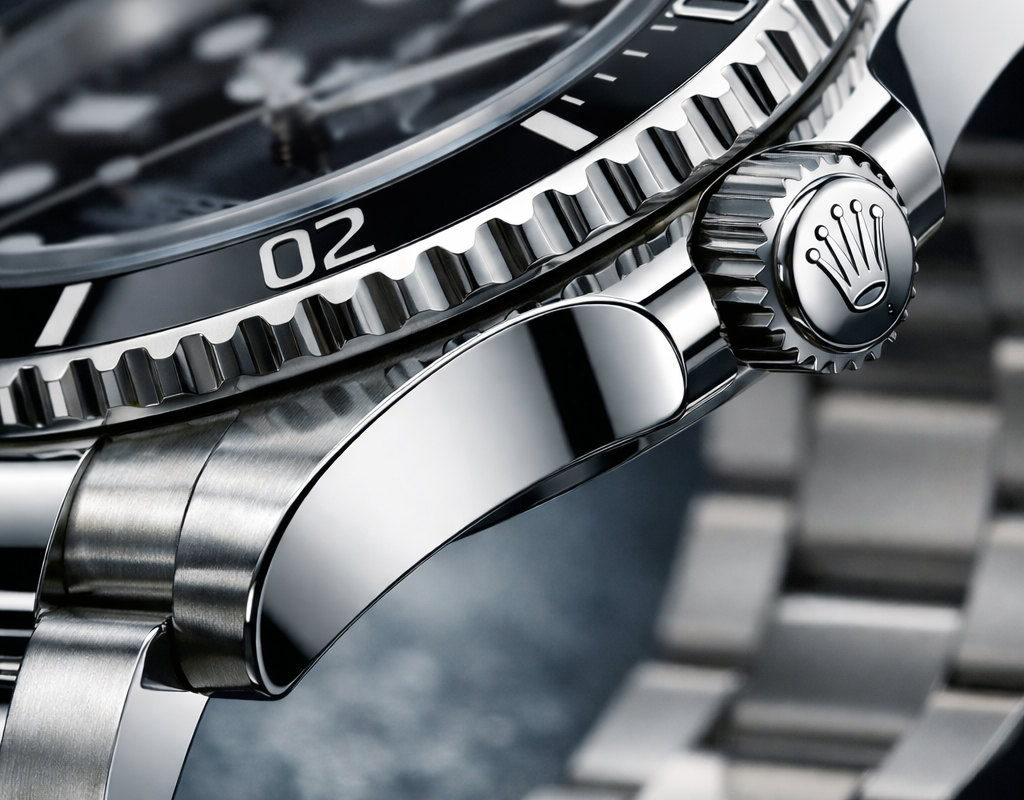
Another important feature of 904L stainless steel is its ability to achieve a refined polished surface.
The material can be polished to produce a bright mirror-like finish that reflects light clearly.
It also supports brushed finishing techniques that create a softer and more textured appearance.
Common finishing methods used for watch cases include:
Mirror polishing for reflective surfaces
Satin brushing for subtle texture
Mixed finishing that combines polished and brushed areas
These finishing options help enhance the visual depth and design contrast of the watch case.
4. Higher Machining Difficulty
Although 904L offers several advantages, the material is generally more difficult to machine than 316L stainless steel.
The higher alloy content increases the hardness and toughness of the metal during manufacturing.
This requires more precise cutting tools and careful finishing procedures.
As a result, machining processes may take longer compared with standard watch steels.
This manufacturing complexity is one reason why 316L remains widely used across the watch industry.
904L vs 316L Stainless Steel
316L stainless steel is currently the most widely used material in watch manufacturing.
904L stainless steel can be viewed as a higher alloy alternative with improved corrosion resistance.
The following comparison highlights some general differences between the two materials.
| Feature | 316L Stainless Steel | 904L Stainless Steel |
|---|---|---|
| Corrosion resistance | Good | Higher |
| Alloy content | Moderate | Higher |
| Surface polishing | Good | Brighter finish |
| Machining difficulty | Easier | More demanding |
| Industry usage | Very common | Less common |
Both materials are durable and suitable for watch case construction.
In everyday use, the difference is usually related to finishing quality and resistance to certain environments.
Why 904L Is Used in Watch Cases
Watch cases require materials that balance durability, corrosion resistance, and visual appearance.
904L stainless steel provides several properties that support these requirements.
Key advantages include:
Strong resistance to corrosion and oxidation
Stable structural properties during machining and finishing
Excellent polishing results for refined surfaces
Long-term surface durability in daily wear
Because of these characteristics, the material is suitable for watches designed to maintain their appearance over time.
Maintenance of 904L Stainless Steel Watches
Although 904L stainless steel has strong corrosion resistance, basic care can help preserve its surface finish.
Routine cleaning prevents dirt, salt, and oils from accumulating on the case and bracelet.
Recommended maintenance steps include:
Rinsing the watch with fresh water after saltwater exposure
Wiping the case with a soft cloth to remove moisture
Using mild soap occasionally when deeper cleaning is needed
Avoiding abrasive cleaning materials that may scratch the surface
These simple practices help maintain the watch’s appearance and keep the steel surface clean.
Is 904L Stainless Steel Better for Watches
904L stainless steel offers excellent corrosion resistance and the ability to achieve a high-quality polished finish.
However, the difference compared with 316L stainless steel is often subtle in everyday wearing conditions.
Both materials are durable, widely used, and suitable for modern watch manufacturing.
In many cases, the choice between 904L and 316L depends more on design preferences and manufacturing approaches.
