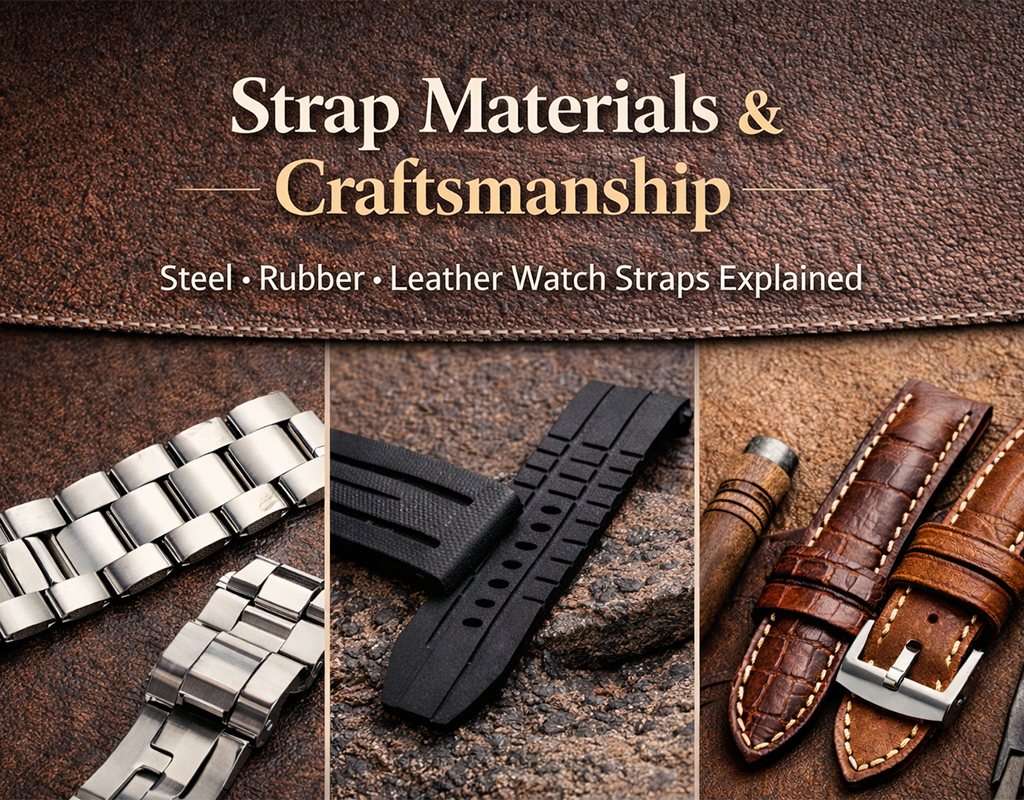
Strap Materials & Craftsmanship
Watch straps play an important role in comfort, durability, and the overall visual balance of a watch. The strap connects the watch case to the wrist, and its material selection and craftsmanship influence how the watch feels during daily wear.
Different strap materials provide distinct textures, flexibility levels, and long-term wear characteristics. Understanding strap materials and craftsmanship helps explain how various strap types perform in different environments and usage scenarios.
This page explains common strap materials and the basic craftsmanship techniques used in watch strap construction.
Common Watch Strap Materials
904L Stainless Steel
904L stainless steel is a high-grade stainless steel alloy commonly used in metal watch straps due to its strong corrosion resistance and stable structural properties.
Compared with standard stainless steel materials, 904L stainless steel contains higher levels of chromium, nickel, and molybdenum, which help improve resistance to oxidation, moisture exposure, and long-term surface wear.
Key characteristics include:
High resistance to corrosion in humid environments
Strong structural stability that maintains shape under repeated movement
Smooth surface finishing after brushing or polishing processes
Higher density and noticeable weight compared with many strap materials
Because of these properties, metal straps made from 904L stainless steel are widely used for daily wear watches, as they can tolerate regular exposure to moisture, sweat, and environmental changes.
Common craftsmanship features include:
Multi-link metal bracelet construction that distributes weight evenly
Precision-cut links that maintain consistent spacing and alignment
Brushed or polished finishing applied to different surfaces of the bracelet
Screw pins or pressure pins used to secure the bracelet links
Adjustable folding clasp systems that allow wrist size adjustment
These construction methods help maintain bracelet durability, flexibility, and long-term structural stability.
Rubber Straps
Rubber straps are designed primarily for flexibility, water resistance, and comfort in active environments. They are commonly used in watches intended for sports activities, outdoor use, or aquatic environments.
Rubber materials are capable of maintaining elasticity across a wide temperature range, which allows the strap to adapt to wrist movement while maintaining structural durability.
Key characteristics include:
Lightweight structure, which reduces wrist fatigue during extended wear
High flexibility, allowing the strap to follow wrist movement naturally
Strong water resistance, suitable for humid or wet environments
Textured or patterned surfaces designed to improve grip
Because rubber straps do not absorb water easily, they are often used in watches intended for environments where moisture exposure or physical activity is common.
Craftsmanship features include:
Molded strap construction created through shaping processes
Ventilation grooves that improve airflow and reduce moisture accumulation
Textured surface patterns that increase grip and visual depth
Reinforced buckle sections designed to handle repeated fastening
Some rubber straps also include curved strap ends that follow the shape of the watch case, which helps improve wearing stability and overall visual integration with the watch.
Leather Straps
Leather straps are widely used in traditional watch designs because they offer a classic appearance and a comfortable wearing experience.
Leather is a natural material that gradually adapts to the shape of the wearer’s wrist, which means the strap often becomes more comfortable after extended wear.
Key characteristics include:
Soft texture that improves flexibility over time
Comfortable contact with the skin, especially during daily wear
Natural grain patterns that create visual variation
Lighter weight compared with most metal bracelets
Several leather types are commonly used in watch straps.
Examples include:
Calf leather
Crocodile-pattern leather
Oil-treated leather
Different leather treatments influence surface texture, flexibility, and resistance to wear.
Craftsmanship features include:
Layered leather construction, which increases structural strength
Edge sealing or painted edges to protect the leather layers
Hand stitching or machine stitching along the strap edges
Reinforced buckle areas designed to handle repeated bending
The combination of layered construction and reinforced stitching helps maintain strap stability and long-term durability.
Strap Craftsmanship Basics
Watch strap craftsmanship involves several processes that determine durability, comfort, flexibility, and appearance. These processes vary depending on the strap material and the intended use of the watch.
Stitching Methods
Stitching is a critical structural element, particularly in leather straps, because it holds the strap layers together and helps prevent material separation during repeated wrist movement.
Different stitching methods can influence both structural strength and visual style.
Common stitching methods include:
Hand stitching, often associated with traditional strap construction
Machine stitching, used to achieve consistent spacing and efficiency
Reinforced edge stitching, applied in high-stress areas of the strap
The stitch spacing, thread strength, and alignment all influence how well the strap maintains its structure during long-term use.
Surface Finishing
Surface finishing techniques influence both the appearance and tactile feel of the strap.
Different materials require different finishing processes.
Examples include:
Brushed or polished finishing applied to stainless steel bracelets
Molded surface textures used on rubber straps
Surface treatment processes applied to leather materials
These finishing methods influence light reflection, surface smoothness, and resistance to wear, which directly affect the overall visual quality of the strap.
Clasp and Buckle Construction
The clasp or buckle system determines how securely the strap attaches to the wrist and how easily the watch can be worn or removed.
Different strap designs use different fastening systems depending on the material, weight, and intended use of the watch.
Common clasp types include:
Folding clasp
Pin buckle
Deployment clasp
A well-constructed clasp system improves wearing stability, security, and daily usability.
Comfort and Wearing Experience
The comfort of a watch strap depends on several combined factors, including material flexibility, strap weight, surface texture, and breathability.
Different materials create different wearing experiences.
For example:
Metal bracelets provide strong durability but tend to feel heavier on the wrist.
Rubber straps offer flexibility and water resistance, making them suitable for sports or outdoor environments.
Leather straps provide a softer and more traditional wearing experience, which is often preferred for formal settings.
Because wrist shapes and wearing habits vary between individuals, the preferred strap material often depends on personal comfort preferences and usage conditions.
Durability Considerations
Each strap material responds differently to environmental conditions such as moisture, temperature changes, and mechanical stress.
Metal Straps
Metal straps typically provide strong structural durability and high resistance to moisture exposure, which allows them to maintain their shape and appearance during long periods of regular wear.
Rubber Straps
Rubber straps generally perform well in wet environments and high-activity conditions, because the material resists water absorption and maintains flexibility.
However, long-term exposure to strong sunlight or extreme temperatures may gradually affect rubber elasticity.
Leather Straps
Leather straps provide excellent comfort and flexibility, but they require more careful maintenance because leather materials can absorb moisture and may wear faster in humid environments.
Proper care and appropriate usage conditions can significantly extend the lifespan of any strap material.
